
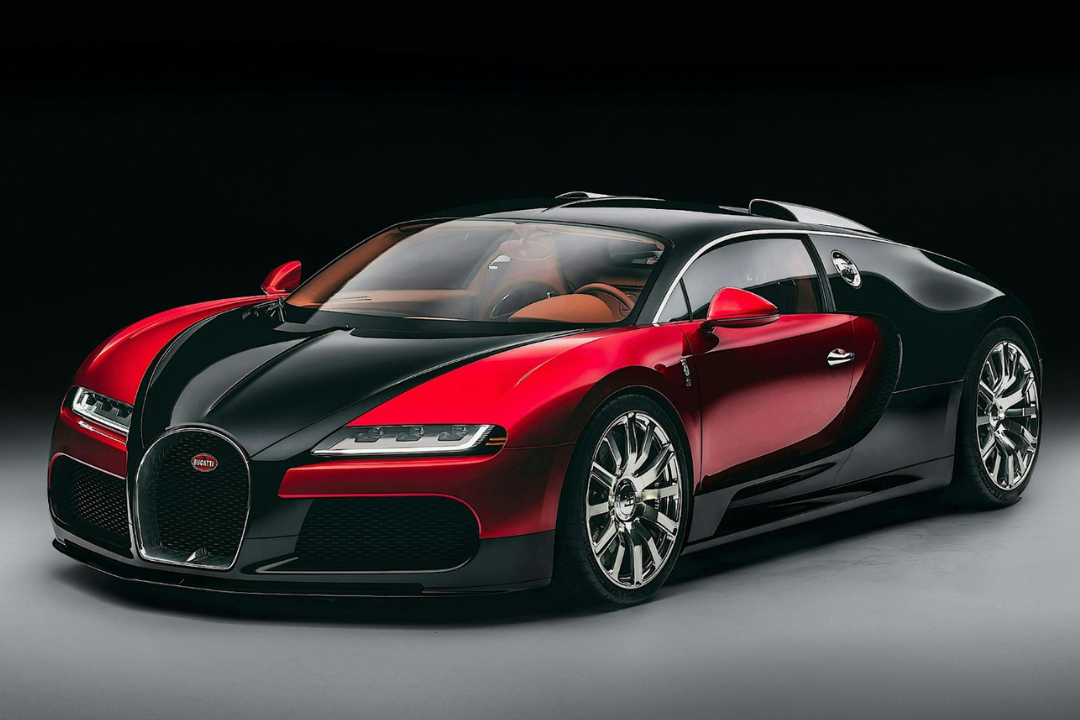
Bugatti Honors Its Legacy
In the world of ultra-luxury automobiles, few moments have truly redefined what is possible. One of them occurred twenty years ago, with the introduction of the Bugatti Veyron — a vehicle that reshaped the boundaries of speed, engineering, and exclusivity.
With the unveiling of the Bugatti FKP Hommage, the brand looks back at that turning point while honoring Ferdinand Karl Piëch, the visionary leader behind Bugatti’s modern renaissance.
A Tribute Rooted in Modern History
The FKP Hommage is not a production model, but its significance runs deep. It serves as a symbolic bridge between Bugatti’s heritage and the technological ambition that gave birth to the Veyron in the mid-2000s. Clean surfaces, restrained elegance, and analog-inspired details reinforce a clear message: true luxury does not need excess to make a statement.
This concept reflects how Bugatti views innovation — not as constant disruption, but as evolution grounded in identity.
Why the Veyron Still Matters
When the Veyron was introduced, it did more than set records. It redefined expectations for what a hypercar could be, influencing an entire generation of high-performance vehicles and establishing Bugatti as a benchmark once again.
Two decades later, the FKP Hommage acknowledges that legacy — reminding collectors, enthusiasts, and the industry itself that modern automotive history is already rich with milestones worth preserving.
The Engineering Legacy of the Veyron
At the heart of the Veyron’s impact was its unprecedented powertrain. The production model featured an 8.0-liter quad-turbocharged W16 engine, producing 1,001 horsepower in its original configuration — a figure that was considered nearly unattainable at the time for a road-legal vehicle.
This engine architecture required:
-
Four turbochargers
-
Ten radiators to manage thermal loads
-
A dual-clutch transmission capable of handling extreme torque
-
An advanced all-wheel-drive system to translate power into usable performance
The result was a vehicle capable of exceeding 250 mph, while maintaining a level of refinement, drivability, and reliability never before achieved at that speed.
Chassis, Aerodynamics, and Control
Beyond raw power, the Veyron introduced a new approach to structural rigidity and aerodynamic management. Its carbon-fiber monocoque chassis delivered exceptional torsional stiffness, while adaptive aerodynamics actively altered the vehicle’s profile depending on speed and driving mode.
Key technical elements included:
-
Active rear wing functioning as both aerodynamic aid and air brake
-
Ride-height adjustment for high-speed stability
-
Precision braking systems engineered for extreme thermal stress
Automotive Heritage Beyond the Road
Vehicles tied to this level of significance are more than machines. They are rolling assets, cultural artifacts, and engineering statements. As the automotive world continues to evolve, the standards surrounding how these vehicles are handled, moved, and protected evolve as well.
At Auto Movers USA, we follow moments like this closely because they reflect the mindset of today’s high-end vehicle owners: precision, discretion, and expertise are not optional — they are expected.
Photo by Bugatti